News
Measuring the impact of a city's buildings on the weather
Published:16.03.17 — A new model developed at EPFL can help engineers and meteorologists quickly calculate the effect that city buildings have on local weather patterns. A blinds manufacturer is already interested in it, and climate scientists could be next.
Is Reliable Artificial Intelligence Possible?
Published:14.03.17 — In the quest for reliable artificial intelligence, EPFL scientist Marcel Salathé argues that AI technology should be openly available. He will be discussing the topic at this year’s edition of South by South West on March 14th in Austin, Texas.
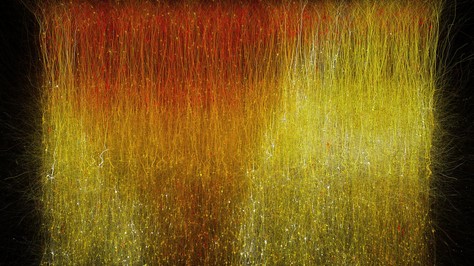
Joint Efforts Towards Treating Paralysis
Published:13.03.17 — EPFL scientists Stéphanie Lacour and Grégoire Courtine report on the status of their research and share their vision about the future of wearable neuroprosthetics at this year’s edition of South by South West in Austin, Texas, on March 12th. Courtine shares some preliminary impressions about clinical trials addressing paralysis that are currently underway at the Lausanne University Hospital.
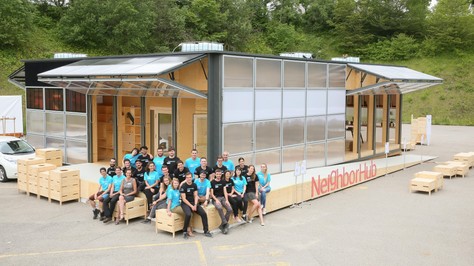
Switzerland's NeighborHub is going to shine in Denver
Published:10.03.17 — Switzerland is taking part in the Solar Decathlon 2017, an international solar construction competition between universities organized by the U.S. Department of Energy. The Swiss Team’s competition entry is NeighborHub, a space for initiating social and environmental change. Banking firm Landolt & Cie is the project’s second Diamond Partner.
Ali H. Sayed appointed new dean of the School of Engineering
Published:10.03.17 — Ali H. Sayed, currently a distinguished professor at the University of California, Los Angeles (UCLA), has just been appointed as the new dean of EPFL’s School of Engineering (STI).
Appointment of EPFL professors
Published:10.03.17 — The Board of the Swiss Federal Institutes of Technology has announced the appointment of six professors at EPFL.
Storing data in single-atom magnets
Published:09.03.17 — Scientists at IBM and EPFL have shown for the first time that it is possible to store in and retrieve information from single-atom magnets. The breakthrough can have significant implications for the miniaturization of magnetic memory devices.
Are you sure you want to import this news into ?
This news will be sent to its subscribers.