News
Hackathon aims to develop responses to the coronavirus
Published:02.04.20 — On 4–6 April , the EPFL student association LauzHack will hold a fully online hackathon to help tackle the coronavirus. The event – put together in just a few days – is open to EPFL students as well as the general public.
EPFL software to enable secure data-sharing for hospitals
Published:02.04.20 — The MedCo system aims to facilitate medical research on pathologies — such as cancer and infectious diseases — by enabling secure computations on decentralized data. The unique software has recently been deployed at three Swiss hospitals.
The implications of the coronavirus for architecture
Published:01.04.20 — The global lockdown caused by the coronavirus has brought the shortcomings and social inequality inherent in modern housing into stark relief. This presents architects with an opportunity to learn some important lessons for their future work. Valentin Bourdon, who is currently completing his thesis at EPFL on the collective aspects of housing, offers his thoughts on this issue.
[ !! FAKE !! ] ETH Zurich's turn to unveil a new logo
Published:01.04.20 — [APRIL FOOLS JOKE!] ETH Zurich has just completed its own rebranding project, drawing inspiration from the new logo that EPFL introduced a year ago. The similar look reflects a desire by the sister schools to build closer ties.
“When it comes to infectious diseases, we're still vulnerable”
Published:31.03.20 — An EPFL professor of Microbiology, Melanie Blokesch reminds us why we need to take infectious diseases more seriously – and be better prepared for future outbreaks.
“The world now has no choice but to count on science.”
Published:30.03.20 — Jacques Fellay, a professor at EPFL’s School of Life Sciences, talks about mutations of the novel coronavirus, variants in the human genome, and how they might affect the current pandemic.
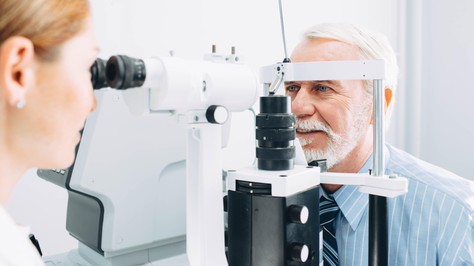
A device for the early detection of certain eyesight problems
Published:27.03.20 — EPFL researchers have developed a device that can zoom in on previously invisible cells at the back of the eye. The technology could be extremely useful for ophthalmologists, in particular for detecting age-related macular degeneration early and assessing new treatment options.
Are you sure you want to import this news into ?
This news will be sent to its subscribers.